
Lobe
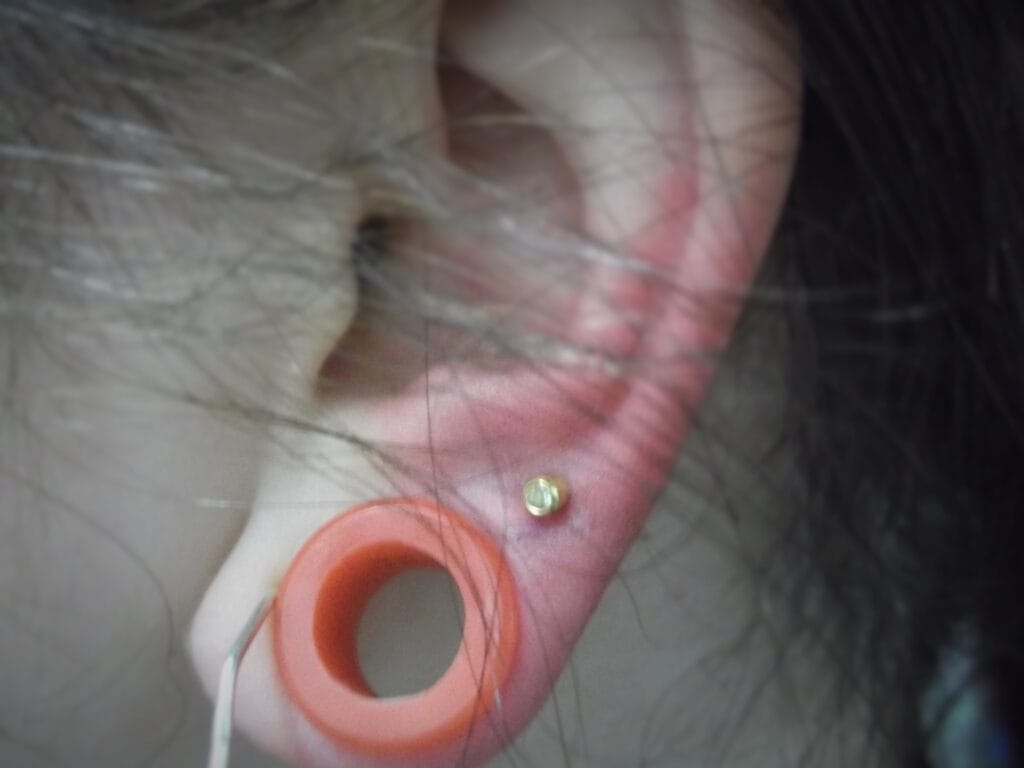
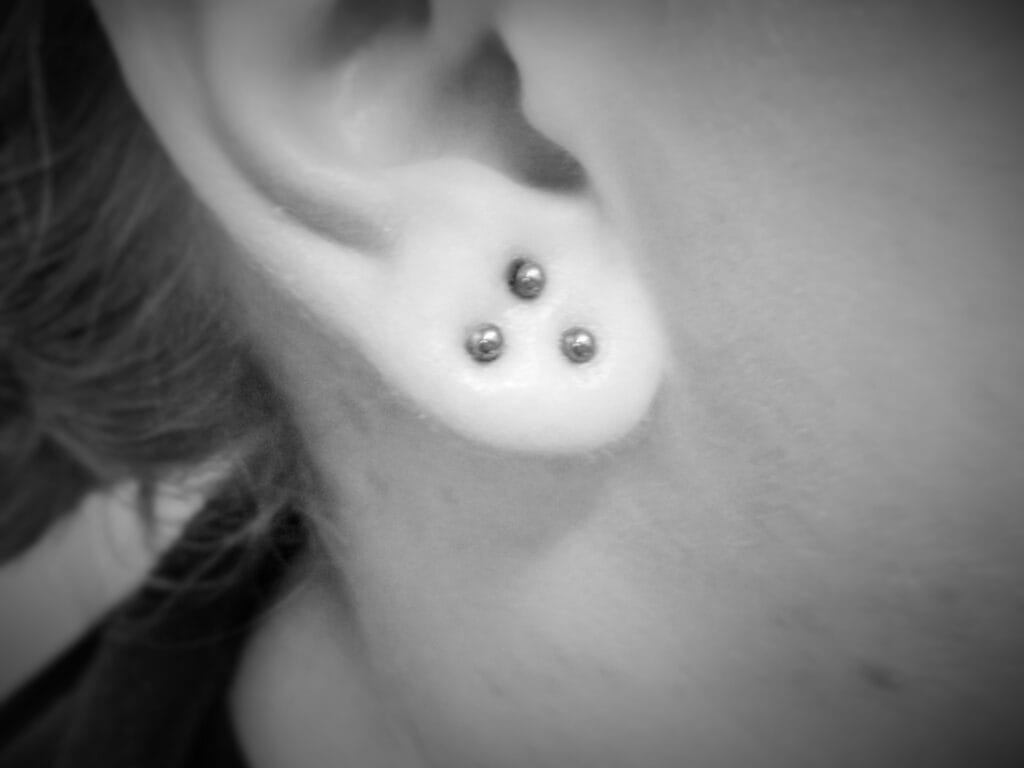
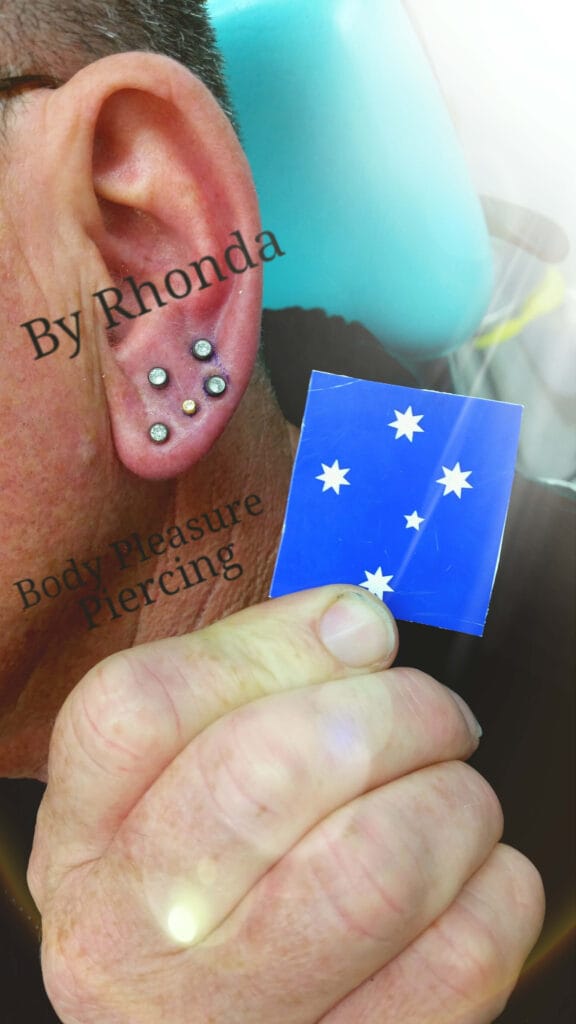
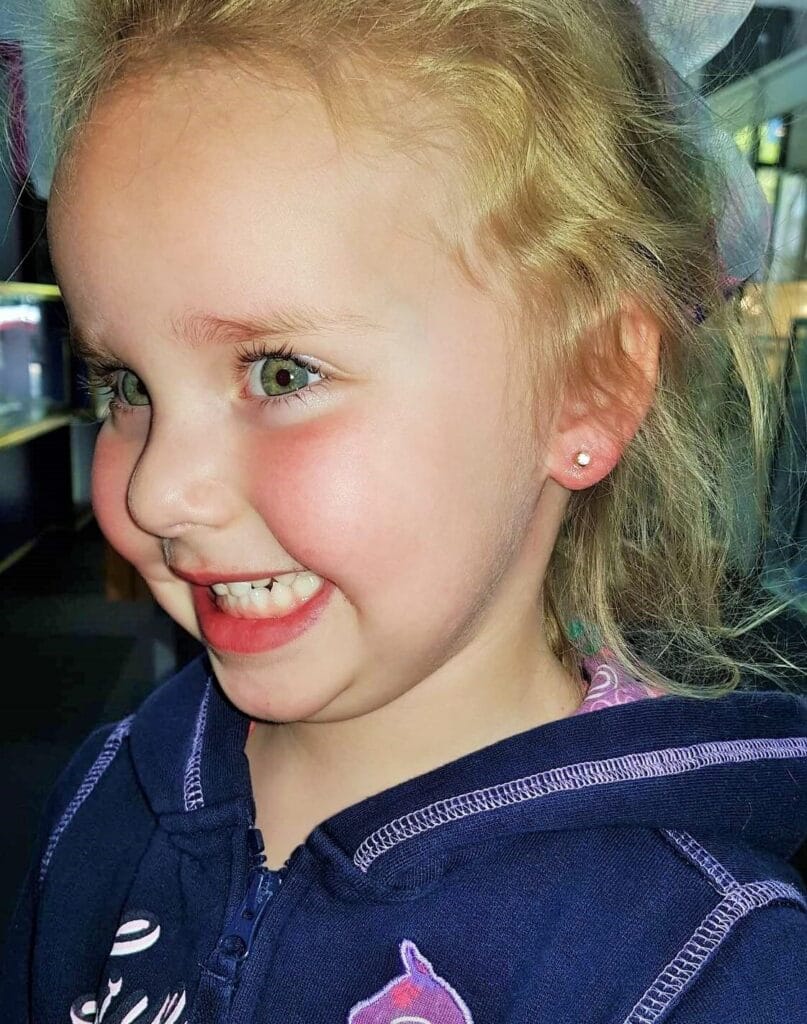
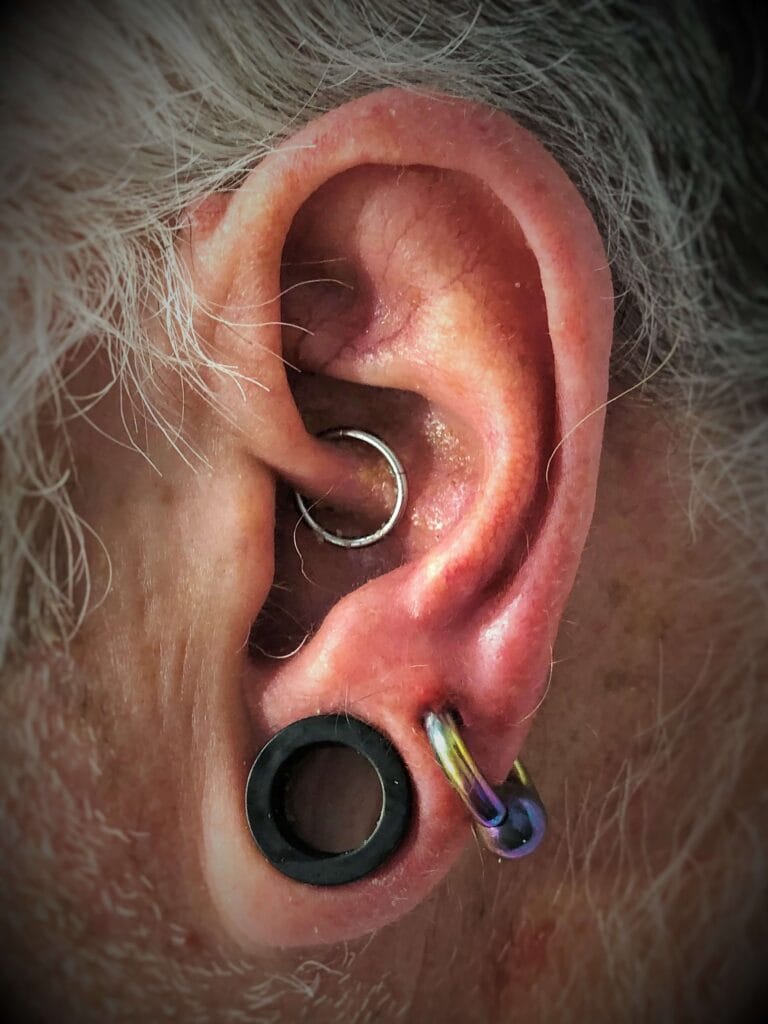
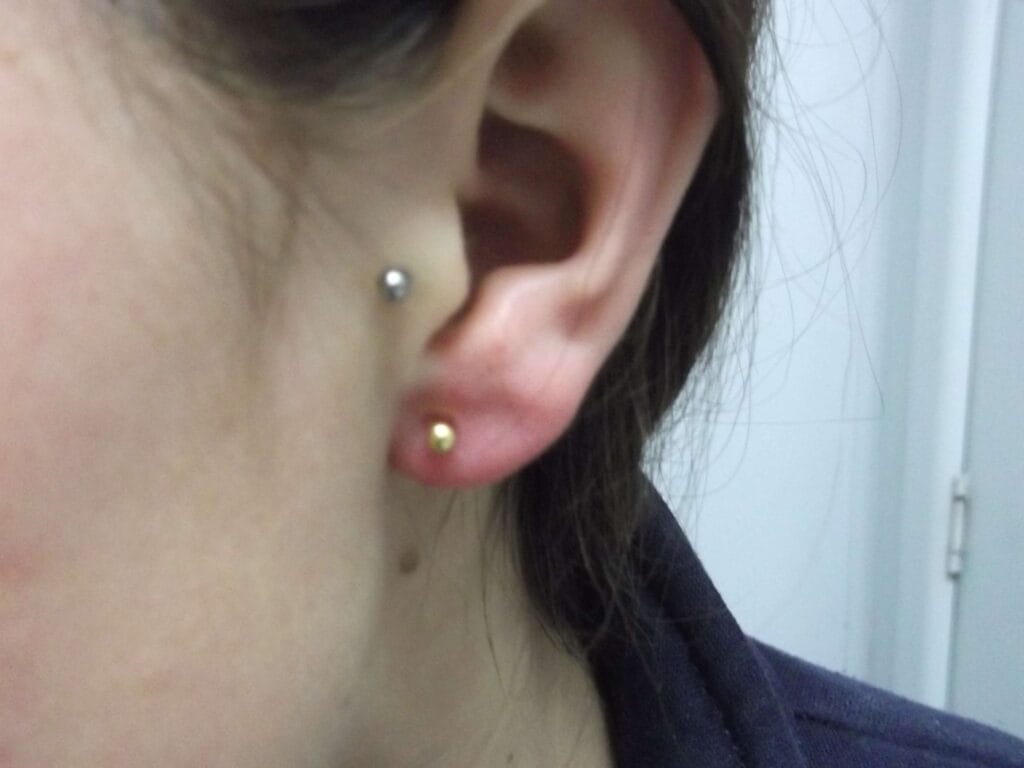
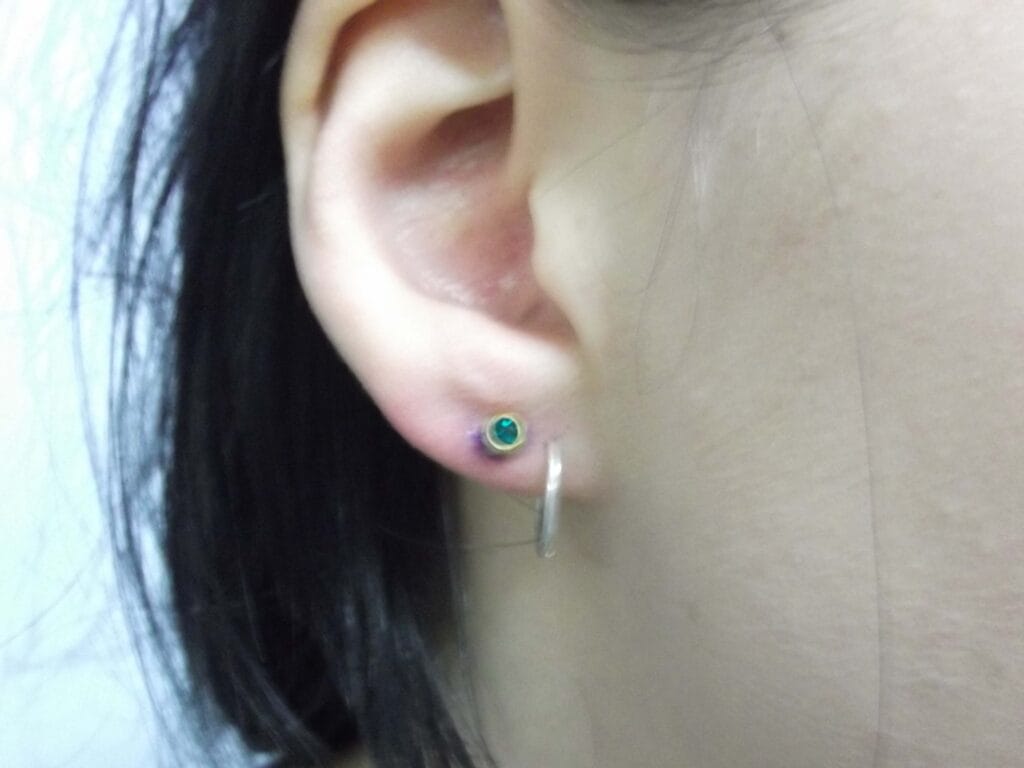
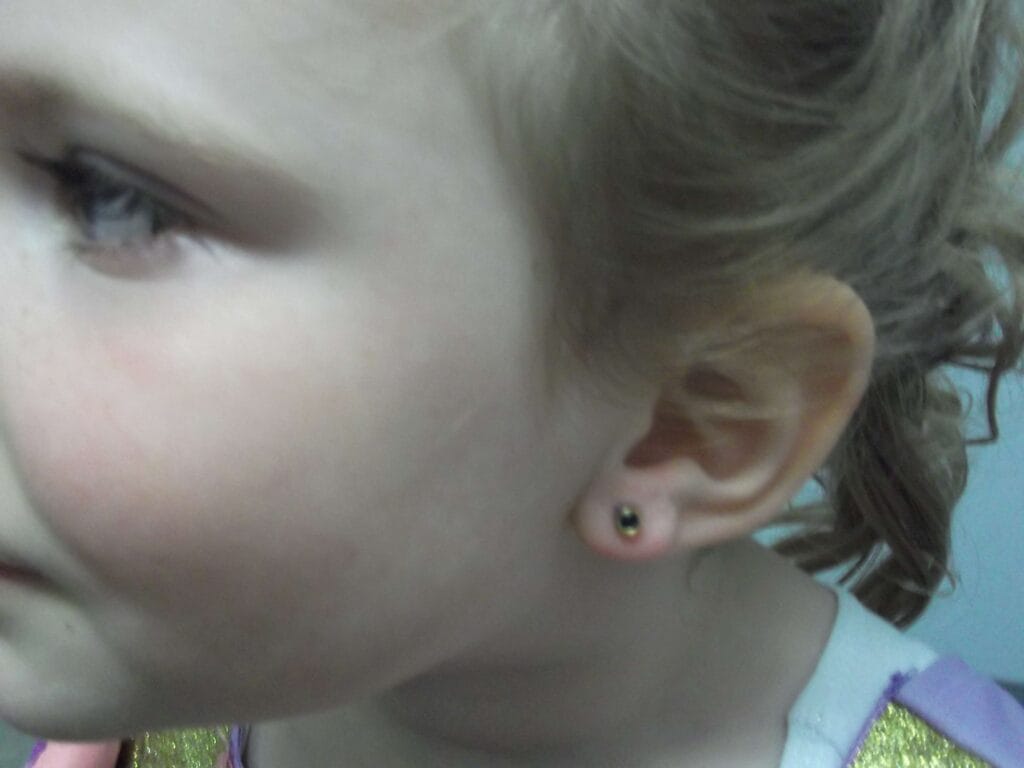
The most common of all piercings is the Ear Lobe and the most common of tools used to pierce is the ear piercing gun. This shoots a semi blunt slightly pointed stud through the ear and into the back of the stud a fast pace. The biggest problem with these is sterilisation and control. The studs are held in a frame and so the exact spot the stud will come out is hard to see and if the gun is held slightly crooked it can not only go through the ear crooked it can jam into the back of the stud on an angle and become stuck. This is quite painful to remove and having a gun stuck to a newly pierced ear must be quite terrifying especially for a young child.
This leads me to an amusing if somewhat horrifying story about a Tattooists wife back in about 1994, she had got hold of a piercing gun and had decided that she was going to make some money by going to her partners shop and doing cheap piercings with the gun. She decided to pierce her own navel (Yes she was going to put an ear stud in her belly with this gun) She loaded it and Bang the stud went through the skin she had pinched up into the gap but the gun got stuck and would not come off. Living about ¾ of an hour drive from her partners shop and being home alone with her children she had to bundle them into the car with the gun still stuck on her now throbbing and painful tummy. She drove to the shop, gun and stud still attached to get him to help her remove it. She had second thoughts about her new money making scheme.
The other problem with the guns is of course sterilisation. No reputable piercing studio will use a piercing gun on ears or anywhere else for that matter because of the inability to adequately sterilise it. I have heard so many stories of hairdressers, Tattooists and even Chemists that have the gun kicking around in the bottom of a draw with dust and dirt and other bits and pieces and then pulled it out and used on the next unknowing child. However, there was a time when the ear piercing gun was revolutionary and the way to bring ear piercing into the shops and malls and by the 1970’s it was seen as the advanced piercing method.
Because back in the 50’s and 60’s mainly women got their ears pierced, many using ice and a sewing needle to make a hole. Women would take their daughter to the doctor who would get a needle and cork and pierce the childs ear which at the time was thought to be scary. By the late 1970’s and early 1980’s in Australia it was common to go down to your local Hairdresser and get a stud shot through your ears with the stud gun. “As easy as this, Bang! Bang!” two studs shot into the lobes generally not marked and usually not in the same place on both ears. But, quick and said to be painless however the thud was followed by hot throbbing earlobes for the next few hours and you were given a bottle of Chlorhexadine in spirit to clean it with if you were lucky or you just used some of Dads Metholated Spirits. ( The industry has come a long way since those days.)
Personally, I had mine done at a Hairdresser in roughly 1983 (they were very uneven which still annoys me). In 1984 I watched one of the boys in my class at school shove a sewing pin through his ear. My thoughts at the time, “that’s not so tough.” And the next day I got one of my studs from having my ears pierced and I ‘sterilised it’ by putting it into metholated spirits and setting light to it. (I know now that this does not actually sterilise anything at all and please don’t try this at home!) I then shoved the ear stud through my own ear and put the back on it. What a sense of accomplishment. I guess you could say this was the first piercing I ever did. I probably owe the start of my piercing career to the boy who in our year 10 Maths class pierced his own ear. Although it was not until I met Geoff in 1986 that this all really began.
Because in the Infections and problems from this sort of thing were not uncommon back then and so a lot of research and study has gone into providing the service that we provide today to do ear piercings correctly with minimal risk of infection.
So, by the late 1980’s the men were well and truly on the bandwagon and getting ear piercings. However, that was a time when male ear piercings were often used as a sign of sexuality. The right side being seen as the feminine side and the left as the masculine. So, a homosexual male would get his right ear pierced as a subtle indicator to other like minded males that he was approachable and so the heterosexual males would only get their left ear done as proof that they were not homosexual. This indicator had it’s flaws because often the homosexual male would get his left ear done so as not to appear homosexual (This was a time when it could be dangerous in some areas to be openly ‘gay’ and so a simple ear piercing in the right ear could bring persecutuion.) By the 1990’s men were getting both ears pierced and then by the mid 1990’s the stretching to larger sizes began.
By 2001 stretched lobes were becoming common and males getting both ears pierced was also common. While some people still ask which is the “Gay side” for most it is not a real issue. Although, we still find that men who are only planning on getting just one ear pierced will still choose the Left as the preferred side even if it is not to make a statement at all.
In 2019, it is more common for men to get both ears pierced and stretching has taken a slight downturn although with the introduction of a heap of new designs in ear weights and plugs I don’t think we have seen the end of big stretched lobes. With improvements in ear repairs and ear stitching if you do change your mind they can be fixed. I have had a number of clients who have had lobes repaired after being stretched to 30 or 40mm plus and they loved them but then they found that they just wanted to wear normal earrings again and so got them repaired. (see our page on ear stitching).
The industry has experimented with guns and procedures and now the preferred method of piercing is with the use of a needle into a cork, only nowadays the doctors leave it to the professional body piercer. At Body Pleasure Piercing we have modified this procedure by adding the use of anaesthetic and only using a piercing blade and not a cannula needle because we have found that cannula needles drag on the tissue causing more tissue damage which not only hurts more but increases the healing time and therefore increases the risk of infection. All piercing done at Body Pleasure Piercing involve the use of anaesthetic and single use piercing blades, for your comfort and safety.